First Nations

Elements area

Taxonomy

Code

Scope note(s)

  • Individuals and communities of native ancestry

  • North American indigenous peoples, Metis and Inuit

  • Records pertaining to and created by First Nations individuals, families, bands, agencies

  • Government agencies and treaties

  • First Nations organizations and businesses

  • First Nations schools and education

  • Issues pertaining to First Nations peoples or history

Source note(s)

  • MemoryBC Subject Groups

Display note(s)

    Hierarchical terms

    First Nations

      Equivalent terms

      First Nations

        Associated terms

        First Nations

          1289 Archival description results for First Nations

          1289 results directly related Exclude narrower terms
          2008.3.3.3.6 · Item · 26 May 1995
          Part of Bridget Moran fonds

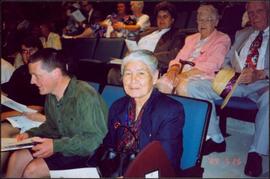
          Photograph depicts Mary John sitting next to aisle in Canfor Theatre at the University of Northern British Columbia in Prince George, B.C. Unidentified individuals seated in foreground and background. Accompanying note from Maureen Faulkner: "Mary John takes my seat." Photo taken on the day Bridget received an Honourary Law Degree, before ceremony began.

          2008.3.1.22.64 · Item · 1997
          Part of Bridget Moran fonds

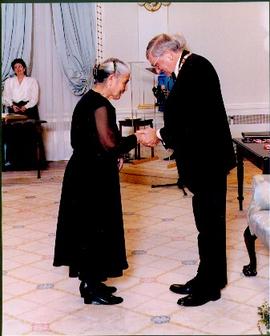
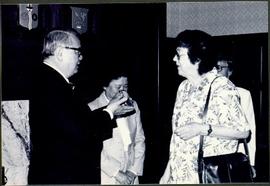
          Photograph depicts Mary John shaking hands with unidentified man at official ceremony where she was awarded the Order of Canada for outstanding service to her community. Two unidentified woman stand in background in large ornately furnished room.

          2008.3.1.211.8 · Item · 9 Sept. 1991
          Part of Bridget Moran fonds

          Audio recording consists of an interview conducted by Bridget Moran with Mary John.

          Audiocassette Summary

          00’05” Bridget is interviewing Mary John who discusses a potlatch held at Stoney Creek that Bridget attended. Bridget asks about the talking stick and she asks Mary John to explain its significance. Mary explains there had been a naming ceremony about a year ago and that a woman named Maisie had changed clans from her mother to her father’s clan. Mary notes while this is unusual, her father’s only son had died and therefore requested that the daughter changed clans. At this ‘September potlatch’ therefore this woman had to change tables at the potlatch.

          04’00” Mary explains the context of the September Potlatch. She notes that Maisie had hosted this potlatch to pay back for the gifts that had been provided for her from a year ago when she received a new name. They then discuss the amount of money that the host gave to the guests and the amount of money that is normally provided – there is no particular amount ‘whatever you wish’ Mary notes she had provided Maisie with a gift last year of $100 but that Maisie gave her back $200 – that is not required – there is no required amount

          07’30” Mary explains that at a potlatch you are expected to bring a case or few bags of food

          08’00” Mary discusses the type of food provided at a potlatch; it is traditional food not western food; Bridget notes there was caribou provided there. Mary explains that the host of a potlatch asks people to hunt for moose and deer meat in order to prepare for the food to be served. Bridget then talks about the food that was served and Mary notes it included also fish and beaver.

          11’00” Bridget asks Mary to talk about the gifts given to her daughter Flo at the potlatch in exchange for a loan she provided to another woman whose husband had died a year before. Bridget notes it was a ‘touching’ moment.

          12’00” Mary talks about the Priest ‘Father Brian’ who was at the potlatch. Four clans collected money and gave it to the priest for his work [missionary work?]

          15’07” Mary explains the situation of Geraldine Thomas –that at the potlatch she was not seated before; that is she was not initiated before and so she was seated at the potlatch

          15’57” Tape stops momentarily

          16’09” Mary continues to talk about Geraldine and the potlatch events; the significance of the tapping of the talking stick; then she was seated and guests give her gifts. Then Mary talks about Ernie and her late daughter Helen who also wanted to cross their clan but that Mary ‘did not let her go’

          20’00” Mary talks about the feelings of a child who gives up their clan and that it is like ‘giving up one of your children’ as Celina noted to Bridget at the event.

          21’00” Mary talks about her son Ernie who crossed over to his father’s clan and that he was gifted at the potlatch

          22’00” Bridget then notes that at this potlatch that the Frog Clan became host of the Grouse clan at this potlatch. Mary explains that the clan then had debts to pay at this potlatch.

          26’00” Mary talks about the death of Stoney Creek members; she is unsure when there will be another potlatch in Stoney Creek.

          28’00” Bridget notes that she did not understand the ceremony as it was in Carrier language; however Bridget notes it is a pity the white world doesn’t see potlatches as they are ‘so touching’

          31’00” Mary explains that each clan takes care of the deceased family members and takes care of putting up the headstone

          32’00” Tape ends abruptly

          Mary John - Cheslatta
          2008.3.1.211.7 · Item · 6 July 1993
          Part of Bridget Moran fonds

          Audio recording consists of an interview conducted by Bridget Moran with Mary John.

          Audiocassette Summary
          Scope and Content: Tape consists of a recording of Bridget interviewing Mary John primarily about her visit to the former native village site of Cheslatta

          Side 1
          Interview in process

          00’05” Bridget interviews Mary John, Mary is referring to Madeline her niece.

          1’00” Bridget asks Mary what made her decide to go to Cheslatta – to see the site where she had lived. Bridget asks if it was a ‘rediscovery’ trip. Bridget asks if this is where the village was burned out and flooded out [by Kemano development] Mary talks about her son Ernie wanting to go there and create a territorial hunting ground. She talks about going there with her niece Madeline and Alex

          8’40” Mary explains how they got to Cheslatta; the travel there was by van through Francois Lake and via logging roads; it took about hour and half drive

          11’00” Mary explains it was not the village that had been flooded that they went to; not the original village; she notes there was a campsite set up for them but it was cold at night. There were people there from Stellaco, about 75 total. She describes making bannock on a stick over the fire ‘the real bannock’ for the youth – like an “Indian pizza” (she laughs)

          16’00” Mary continues to talk about the activities that she did at Cheslatta; show the youth how to fish, spear fish, clean fish, cut in strips and smoke the fish. There was no smokehouse but they created a lean- to and smoked the fish. Mary also notes another day Mary and Madeline took the youth to the bush and talked to them about uses of trees –

          22’00”-20’25” Mary describes the steps involved with showing the youth at the Cheslatta camp how to collect spruce in order to build a smoke house for smoking the fish

          29’30” Mary discusses food that she prepared for the gathering for the people

          31’00” Mary talks about the group visiting the old village Cheslatta after the gathering

          Mary then leaves to attend to a crying baby [a great-grand-child?]; they greet the mother

          33’00” Bridget refers to a group of kids she talked to at Kamloops about their book Stoney Creek Woman. Bridget tells Mary she has letters written to Mary John by several students who had read Bridget’s book that she wants to show her

          36’00” They continue to talk about the former Cheslatta village and what the former village residents want to do about the village; Mary notes there are archaeologists working there. Mary states the people have not yet received compensation for being taken off their land. Bridget notes those people loss their sense of community

          38’31” Mary remarks the people at Cheslatta “have a good chief” “very humble person”

          39’40” Bridget asks Mary about the Lejac pilgrimage. Mary then talks about the pilgrimage that is held at Lejac and that she had just been there ‘on Sunday night’; she notes it is arranged by Celina; she notes there were Tache people there. Bridget asks if there are children buried at Lejac and Mary notes there are children and students buried there – about 15 to 20 buried there.

          43’00” They briefly discuss if this was a rediscovery for the Cheslatta people at the event. Mary agrees; she notes she stayed there for 10 days; Bridget remarks it was similar to Mary’s former camp of what she had experienced at Wedgewood. They talk about Mary’s son Ernie and that he has in Bridget’s view ‘leadership qualities”

          45’30” Bridget asks about getting a bannock recipe for a Senior’s cookbook. Mary begins to tell the recipe

          Side 2
          47’40” Mary continues to show Bridget how to make bannock

          50’00” Mary briefly refers to the event at Cheslatta again

          End of tape

          Mary John
          2008.3.1.211.6 · Item · Aug. 1987
          Part of Bridget Moran fonds

          Audio recording consists of an interview conducted by Bridget Moran with Mary John.

          Audiocassette Summary
          Context: Tape recording is an interview between Bridget and Mary John in which Bridget initially asks Mary John about events after the inquest into Coreen Thomas’s death. Bridget notes also that she wants to provide an update on Mary John’s life 10 years after the inquest.

          Side 1
          00’05” Bridget asks Mary John about her role in the Coreen Thomas inquest. Mary thinks that she discovered Coreen’s death due to the ringing of the church bells [to announce a death]. She tries to recall the series of events leading up to her time being involved in getting an inquest. Recalls Sophie Thomas’ desire to have an inquest into her death

          6’00” -10’00” She recalls that the [Indian] Homemakers Association became involved in attempting to get an inquest. She says ‘she was just tagging along with it …I was not a fighter” Bridget notes that Harry Rankin stayed at Helen’s house when he represented the Homemakers Association at the inquest. Bridget recalls the ‘marvellous’ dinner that was put on for them at the time of the inquest by Mary John and Helen. Mary John notes it was at the invitation of the Homemakers Association for the group to come to her house.

          10’:00”-14’00” Bridget and Mary talk about follow-up to the inquest and Coreen’s family.

          14’50”- 25’00” Mary talks about her involvement as well as others in the creation of the Elders Society after the death of Mary’s son due to drowning in 1978. The Society had workshops in an effort to revive their culture with the hope of having the younger generations take pride in their culture. One of the activities was the building of the Potlatch House in 1980 where they did traditional activities including tanning of hides.Talks about acquiring the land to build the potlatch house and having the Chief take care of getting the land from BCR; the Society cleared the land twice over to set up the house. Mary explains that the Society acquired funding of $93,000.00 from ARDA [?] to clear the land from the logs and build the house.

          26’00”-30’00” Mary talks about a new project that the Society has to build 10 rental tourist cabins as a business for the youth to operate. Bridget suggests it could be similar to that at K’san. Mary also explains that there is a cook-house at the Potlatch House as well and that it has been used for community events, weddings, dinners, organizational events also.

          Tape stops momentarily and starts again

          30’05”- 36’00” Mary talks about the drowning of her son and finding of his body in 1978 as well as other tragedies that happened in the community which led to the creation of the Elders Society to assist the youth

          36’30” -39’30” Mary talks about the joys of finally having her own house and the building of the house

          39’32” -42’40” Mary talks about the organizations that she is involved in now. She talks about a film made in the community about social workers coming in the community to work with Elders to care for issues related to youth. She notes that ‘that’s when the ice broke’ and it made a difference.

          43’00” She talks about a dinner that she holds every year for the police officers to thank them for the service they do for society

          43’30” Talks about fishing at Fraser Lake

          44’00” -46’00” Mary talks about her work now at her house to teach the youth about their culture: making of baskets, moccasins, tanning of hides

          End of side 1

          Side 2
          46’30”-48’00” Mary continues to talk about the activities that she does with native youth to educate them about their culture

          48’50” Bridget asks about whether the youth are involved in tree-planting and asks another woman in the room (Bernice?)

          50’00” – 56’00” Bridget asks what her three wishes are for her people: better lives; more education for the young people to have better jobs; they need to get out to the white world and not be so isolated; she refers to when she worked in ‘the white world’ She talks about the isolation of the reserve and yet the protection that it offers to the people as well. Bridget and Mary talk about the reserve offering a way to protect the native culture. Bridget asks why it is important to protect their culture. Mary notes their culture is so important; she notes that other cultures like Japan and China haven’t lost their culture so why should the natives.

          56’05” Mary notes that none of the grandchildren speak Carrier and the need to protect their culture and language when being surrounded by a white community. Refers to her grandson Fabian who is in the room

          57’00” Bridget recalls a Fort St. James woman who tried to keep native kids out of white schools. She wanted them to be kept on the reserve so that they didn’t lose their culture. She talks about the fight by many to get their native status back – those whose one parent is not native

          58’00” Mary talks about her worries for the young native people in the community who fear they have no future and who have no employment or education.

          End of tape
          Mary Ghostkeeper
          2001.58.10 · File · 1997-1998
          Part of Prince George Metis Elders Oral History Project Collection

          File consists of an oral history given by Mary Ghostkeeper, which was gathered as part of Dr. Mike Evan's oral history project with the Prince George Metis Elders Society. Includes consent forms, transcripts, and the recorded oral history on the original cassettes.

          2009.7.1.073 · Item · [ca 1876 - ca. 1890]
          Part of Archdeacon W. H. Collison fonds

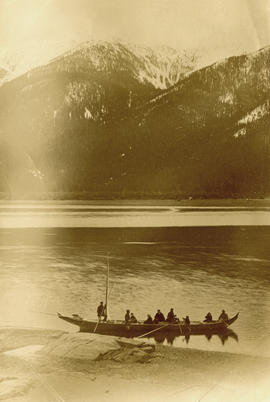
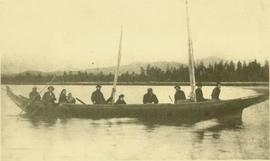
          Handwritten annotations read: "At rest, after a rough passage of two days and a night from Massett, Queen Charlotte's Islands by canoe - W.H. Collison and Mrs. Collison with Indians from Masset"; "Archdeacon Collison Indian Canoe & Crew. Return from Queen Charlotte's Islands, Haida & Tsimshian Crew [...?]" Archdeacon and Mrs. Collison sit in centre of canoe.

          Marie Paquette
          2001.58.18 · File · 1997-1998
          Part of Prince George Metis Elders Oral History Project Collection

          File consists of an oral history given by Marie Paquette, which was gathered as part of Dr. Mike Evan's oral history project with the Prince George Metis Elders Society. Includes consent forms, transcripts, and the recorded oral history on the original cassettes.

          Marie McRae
          2003.11.1.29 · File · 1999-2000
          Part of Island Cache Recovery Project Collection

          File consists of an oral history given by Marie McRae, which was gathered as part of Dr. Mike Evan's Island Cache Recovery Project. Includes consent forms, transcripts, and the recorded oral history on the original media.

          Marie Jobin
          2001.58.13 · File · 1997-1998
          Part of Prince George Metis Elders Oral History Project Collection

          File consists of an oral history given by Marie Jobin, which was gathered as part of Dr. Mike Evan's oral history project with the Prince George Metis Elders Society. Includes consent forms, transcripts, and the recorded oral history on the original cassette.

          2002.14 · Fonds · 1973-2008

          Fonds predominately reflects Ainley's research as a professor at the University of Northern British Columbia. Her research is arranged into thirteen subseries. Research material includes: photocopies of publications and archival material, correspondence, bibliographies, research interviews, transcripts, draft manuscripts, photographs, and other records. A series of personal records includes: retirement activities, her hobbies of art and writing, diplomas, and photographs. The series on her administrative and supervisory activities of professorship of women’s studies and environmental studies is arranged according to the major activities with which Ainley was involved and includes: meeting minutes, memoranda, reports, correspondence, employment, and other records. A series of electronic records relating, predominately, to Ainley’s research includes: draft manuscripts, conference proceedings, bibliographies, transcripts, correspondence, curricula vitae and other records. A series of professional development records includes records from conferences she attended and occasionally presented at as well as other professional development activities that she undertook. A series of correspondence predominantly consists of personal correspondence but also includes professional correspondence related to her research and occupation.

          Ainley, Marianne
          2002.14.1.09.050 · File · 2003
          Part of Marianne (Marika) Ainley fonds

          File consists of a paper and accompanying notes delivered at the 12th International Conference of Historical Geographers in Auckland, New Zealand in 2003. The paper is entitled "Marginal landscapes of science? Gender, environments and colonial encounters in 19th and 20th century Australia, Canada, and New Zealand."

          Margaret Jaffray
          2001.58.12 · File · 1997-1998
          Part of Prince George Metis Elders Oral History Project Collection

          File consists of an oral history given by Margaret Jaffray, which was gathered as part of Dr. Mike Evan's oral history project with the Prince George Metis Elders Society. Includes consent forms, transcripts, and the recorded oral history on the original cassette.

          2001.8.2.2.026 · File · 1983
          Part of Geoffrey R. Weller fonds

          File consists of a paper titled "Managing Canada's North: The Case of the Provincial North" presented by Weller at the seminar "Managing Canada's North: Challenges and Opportunities" held by the Institute of Public Administration of Canada as well as copies of the paper printed for the seminar in English and French. This file was originally numbered to correspond with conference paper number 26 listed in Weller's CV.

          2006.20.11.11 · Item · June 1923
          Part of NBCA Photograph Collection

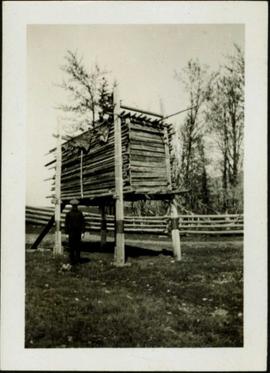
          Photograph depicts man standing in front of elevated, rectangular cache made of wood. Trees stand behind log fence in background. Handwritten photo caption below photograph reads: "Indian Cache." It is believed that this photograph may have been taken near Fort St. James, BC.

          1992.10.2.2 · Item · [1991 or 1992]
          Part of Ron A. Sebastian Collection

          Video recording is a compact VHS recording of the construction of the ceremonial chairs (President's Chair and Chancellor's Chair) for the University of Northern British Columbia.

          Lois Richet
          2003.11.1.40 · File · 1999-2000
          Part of Island Cache Recovery Project Collection

          File consists of an oral history given by Lois Richet, which was gathered as part of Dr. Mike Evan's Island Cache Recovery Project. Includes consent forms, transcripts, and the recorded oral history on the original media.

          2009.7.1.101 · Item · [ca. 1878 - ca. 1915]
          Part of Archdeacon W. H. Collison fonds

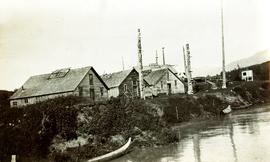
          Photograph depicts totem poles (crest poles?) in front of lodge buildings on river shore. Canoes can be seen floating in foreground, hills in background.

          Handwritten annotation on verso reads: "Chapter XII. Number 1. Section of Indian Village on Nass River showing lodges and totems".

          2001.8.2.2.025 · File · 1983
          Part of Geoffrey R. Weller fonds

          File consists of a paper titled "Local Government in the Yukon and Northwest Territories" presented by Weller at the 1983 Western Social Science Association conference. This file was originally numbered to correspond with conference paper number 25 listed in Weller's CV.

          2001.8.2.2.014 · File · 1980
          Part of Geoffrey R. Weller fonds

          File consists of a paper titled "Local Government in the Canadian Provincial North" presented by Weller at the 1980 Western Social Science Association conference. This file was originally numbered to correspond with conference paper number 14 listed in Weller's CV.

          2006.25.1.66 · Item · Apr. 1963
          Part of Al Elsey Moving Images Collection

          Winter footage at a ranch, believed to be "Pan's." Film includes recordings of the men loading a tractor with an attached flatbed with gear, putting horses in the corral, and feeding cows hay from a flatbed sleigh pulled by a horse.

          Location is believed to be Bella Coola or Tchaha Lake.

          2002.14.4.10 · File · 2004
          Part of Marianne (Marika) Ainley fonds

          File contains material relating to "Re-explorations: new perspectives on gender, environment and the transfer of knowledge in 19th and 20th century Canada and Australia." It consists of lists of contacts for research; teaching notes for women's studies courses; a list of material available at the Penticton Archives; notes from an article; and a timesheet for Ainley's research assistant, Anna-Stina Kjellstrom.

          2008.3.1.16.3 · Item · 12 May 1989
          Part of Bridget Moran fonds

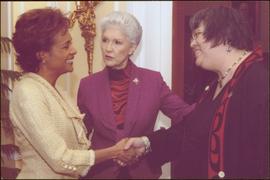
          Handwritten annotation on recto: "His Honour David C. Lam congratulates Bridge Moran of Prince George for her award winning book - Stoney Creek Woman." Lieutenant Governor Lam stands in formal attire on left, presenting medal to Moran. Two woman stand in background.

          Lheidli T'enneh First Nation
          2012.13.2.04.04 · File · 1989-2009
          Part of J. Kent Sedgwick fonds

          File consists of notes, clippings, and reproductions relating to the Lheidli T'enneh First Nation. Includes: "Prince George Native Friendship Centre 40th Anniversary" special edition of the Prince George Citizen newspaper (12 June 2009); "Lheit-Lit'en Nation: Treaty Making with the Government of Canada and the Province of British Columbia" booklet issued by Lheit-Lit'en Nation Treaty Office (1996); "Cooperative Management of the Herrick Valley Old Growth Forest and Aquatic Resources: An Opportunity Under the Federal Government's Initiatives on Developing a 'Model Forest'" proposal from Lheit-Lit'en Nation to the Forest Canada's Model Forest (25 Feb. 1992); and various clipped articles from the Prince George Citizen (2003-2009).

          Lheidli T'enneh First Nation
          2012.13.2.04 · Subseries · 1983-2010
          Part of J. Kent Sedgwick fonds

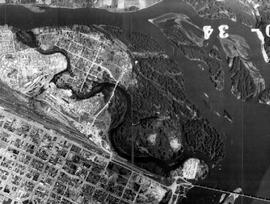
          Subseries consists of materials collected by Kent Sedgwick for research relating to Lheidli T'enneh First Nations. The Lheidli T'enneh are a sub-group of the Dakelh people whose traditional territory includes the city of Prince George, British Columbia. These files primarily consist of material regarding the original Lheidli T'enneh reserve and cemetery, the reserve relocation, and the desecration of the cemetery.